Cooling fan: create a stable working environment for the equipment
Release time:
2023-08-22
In modern industry and electronic equipment,Cooling fanplays a vital role. With the advancement of technology and the improvement of equipment performance, high temperature and overheating have become the main factors affecting the stability and life of equipment. As an effective cooling device, the cooling fan can provide the necessary cooling effect for the system to ensure that the equipment works in a stable environment. This article will elaborateCooling fanproblems and solutions, and discusses its practical application and future development trend.
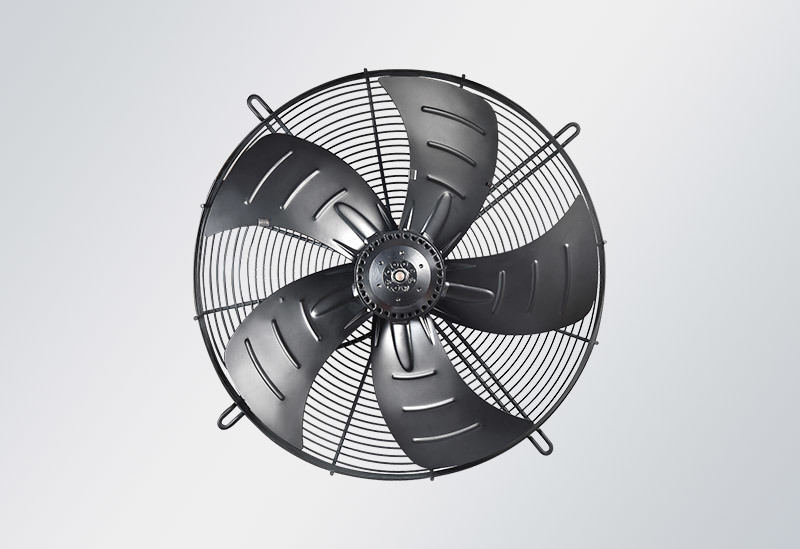
1. the role of the cooling fan
The cooling fan is a device that uses air flow to take away the heat from the surface of the equipment and exhaust it. Its main function is to reduce the working temperature of the equipment and reduce the equipment failure caused by high temperature, thereby improving the stability and reliability of the equipment. In the industrial field, cooling fans are widely used in the heat dissipation of high-heating equipment such as motors, transformers, and lasers. In electronic equipment, due to the trend of high integration, the problem of heat dissipation has become increasingly prominent,Cooling fanIt has also become an essential cooling solution.
Problems with 2. existing cooling fans
Although cooling fans play an important role, there are still some problems with existing products. First of all, the design of some fans is unreasonable, resulting in blocked air flow and poor heat dissipation. Secondly, some fans are noisy, which affects the experience of the device. In addition, some cooling fans have low energy efficiency and waste a lot of energy.
3. optimization scheme
In order to solve the above problems, the following are some specific optimization schemes:
Optimize fan design to improve air flow efficiency. The fan design can be optimized by improving the shape of the fan blades and increasing the number of fan blades, so as to improve the air flow efficiency and enhance the heat dissipation effect.
Reduces fan noise. Can be used to mute the fan, change the fan blade material and other ways to reduce fan noise, improve the use of equipment experience.
Improve energy efficiency. Energy-saving fans can be used, such as using energy-saving motors and optimizing fan blade design to improve energy efficiency and reduce energy consumption.
Intelligent control. Through temperature sensing and control technology, the intelligent control of the fan is realized, and the stability and energy efficiency of the equipment are improved.
4. practice application and effect evaluation
In practical applications, the optimizedCooling fanShowing a remarkable effect. The following are specific application scenarios and effect evaluation:
Industrial field: In the heat dissipation of high-heating equipment such as large motors and transformers, the optimized cooling fan can more effectively reduce the operating temperature of the equipment and improve the stability and service life of the equipment.
Electronic equipment: In the heat dissipation of high-density equipment such as computer servers, the use of energy-saving cooling fans can significantly reduce the operating temperature of the equipment, while reducing energy consumption.
Automotive field: In automotive engines and power systems, the optimized cooling fan can improve heat dissipation efficiency, reduce equipment failure rate, and improve vehicle safety and reliability.
Compared with similar products on the market, the optimized cooling fan shows superior performance in terms of heat dissipation, noise control and energy efficiency. In addition, the application of intelligent control technology also provides a strong guarantee for the stability and energy efficiency of the equipment.
5. summary and prospect
This paper puts forward a specific optimization scheme for the existing problems of cooling fans, and has achieved remarkable results in practical application. The optimized cooling fan shows superior performance in terms of heat dissipation, noise control and energy efficiency, which provides a strong guarantee for the stability and energy efficiency of the equipment.
However, with the continuous advancement of technology and the improvement of equipment performance, cooling fans still face more stringent challenges and requirements. In the future, cooling fans will develop in a more energy-efficient and intelligent direction, providing more complete heat dissipation solutions for various devices. At the same time, we also look forward to more technological innovation and application practices to inject new vitality into the development of cooling fans.
Related News
Service Hotline

Address: 22-01, Luqiao Hong Kong Youth Industrial Park, No.1 North Road, Fengjiang Street, luqiao district, Taizhou City, Zhejiang Province
Telephone:86-576-86630111 86381111
Fax: 86-576-81678111
XINFENGBA FAN