Cooling fans: the key to improving equipment stability and efficiency
Release time:
2023-09-01
In many industrial fields, such as electric power, chemical industry, automobile manufacturing, etc., machinery and equipment will generate a lot of heat during long-term high temperature, high pressure and high load operation. If the heat is not dissipated in time, it will cause the equipment to overheat, reduce the performance of the equipment, and even cause failure. Therefore, the cooling fan has become a key component to ensure the stable operation of the equipment. This paper will explore in depthCooling fanrole, existing problems and optimization scheme.
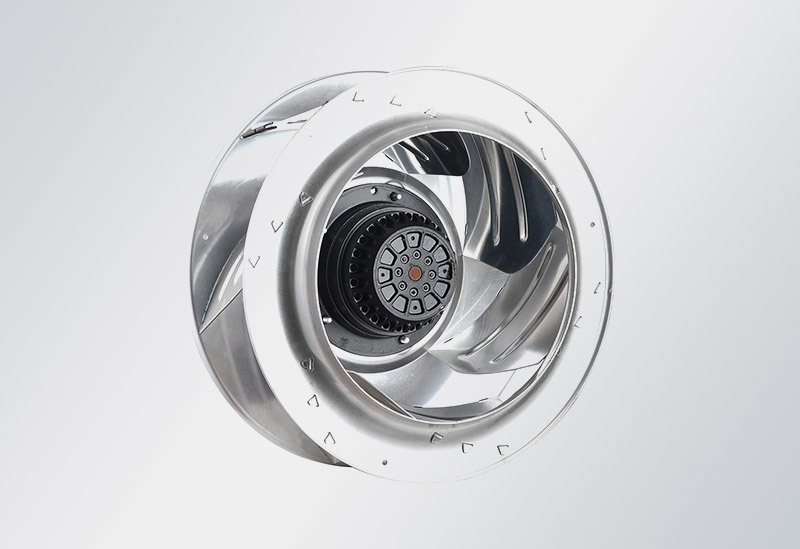
1. the role of the cooling fan
Cooling fanIt is a device that can generate air flow, mainly used to dissipate heat and reduce the temperature of the device. It uses forced air flow to take away the heat from the surface and inside of the device, keeping the device within a suitable temperature range. Cooling fans have a wide range of applications, including transformers and motors in power systems, reactors and dryers in the chemical industry, and engines and transmissions in the automotive industry.
2. problems
Although the cooling fan plays an important role in ensuring the stable operation of the equipment, there are also some problems in practical applications:
Noise: Because the cooling fan will produce a certain amount of noise when running, the noise generated by some equipment during operation will even affect the physical and mental health of the staff.
High energy consumption:Cooling fanThe operation needs to consume a lot of electric energy, which increases the production cost.
The effect is unstable: In some harsh environments such as high temperature and high humidity, the heat dissipation effect of the cooling fan may not be ideal, resulting in excessive equipment temperature and affecting equipment performance.
To solve these problems, we can adopt the following optimization scheme:
Reduce fan noise: Reduce the noise of the cooling fan by adopting a low-noise fan design and optimizing the shape of the fan blades.
Improve fan energy efficiency: select effective, low-energy fan products, and at the same time arrange the fan position reasonably to improve the heat dissipation effect.
Enhanced fan performance: According to the actual environment and use requirements, select the appropriate cooling fan, such as anti-corrosion, explosion-proof, high temperature and other special environmental requirements of the fan. At the same time, the fan is regularly maintained and cleaned to ensure its normal operation.
3. optimization scheme
In order to further improve the performance and efficiency of the cooling fan, the following specific optimization schemes are proposed in this paper:
The use of new materials: for example, the use of lightweight, high-strength materials to make fan blades, improve the rigidity and lightweight of the fan, and reduce noise.
Application of advanced technology: such as the use of brushless motors, streamlined design and other technologies to reduce friction and air resistance, improve fan energy efficiency.
Design intelligent control: by installing temperature sensors and controllers, the intelligent adjustment of the fan is realized. When the equipment temperature rises, the fan speed is automatically increased; when the equipment temperature decreases, the fan speed is automatically reduced to reduce energy waste.
Optimized layout: According to the equipment structure and heat dissipation requirements, the position and number of fans are reasonably arranged to improve the heat dissipation effect.
4. effect evaluation
After implementing the above optimization scheme, we evaluate the effect of the cooling fan:
Reduce noise: By adopting low-noise design and optimizing the blade shape, the noise of the cooling fan is significantly reduced and the working environment is improved.
Improve energy efficiency: choose effective, low energy consumption fan products, and reasonable layout of the fan position, reduce energy waste, reduce production costs.
Enhanced performance: Choose cooling fans suitable for various environments, and perform regular maintenance and cleaning to ensure the stable operation of the equipment and good heat dissipation effect.
By comparing the effects before and after optimization, we can find that the performance and efficiency of the cooling fan have been significantly improved. While ensuring the stable operation of the equipment, it also reduces the operating cost and improves the production efficiency.
5. Summary
This paper analyzes the important role of the cooling fan in the industrial field and the existing problems, and puts forward a series of specific optimization schemes. By implementing these solutions, we can significantly improve the performance and efficiency of the cooling fan, and improve the stability and production efficiency of the equipment. Therefore, the promotion and application of these optimization schemes is of great significance to the production and economic benefits of the industrial field.
Related News
Service Hotline

Address: 22-01, Luqiao Hong Kong Youth Industrial Park, No.1 North Road, Fengjiang Street, luqiao district, Taizhou City, Zhejiang Province
Telephone:86-576-86630111 86381111
Fax: 86-576-81678111
XINFENGBA FAN